
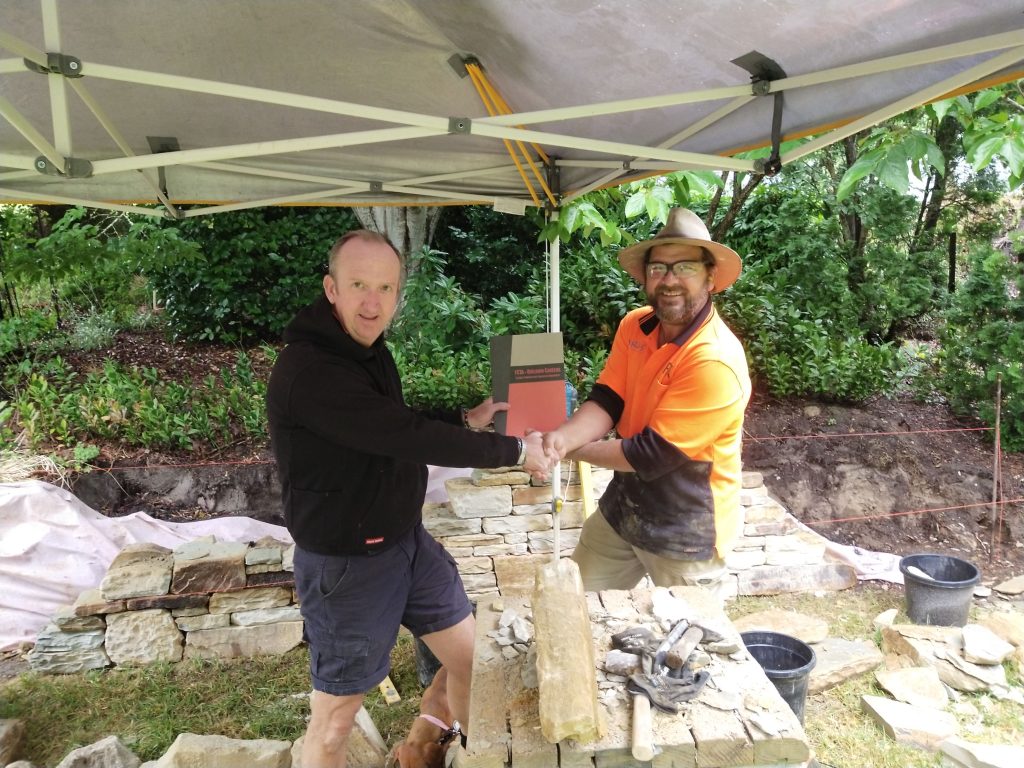
Stonemasonry in Australia. A dying art?
From my earliest days working with stone, over 25 years ago, right up until today, one of the most common remarks about the trade, that I have heard often enough to remark on it, is the common perception of Stonemasonry as a dying art. This is not, from my perspective, entirely true, however there is some basis to the idea.
As an industry, although it exists very much as a niche occupation, stonework actually thrives. Builders, Architects, Landscape designers, all seek to incorporate the natural attributes of stone into their creations. The earthy textures and the natural colours have a broad appeal. A modern kick-back against highly processed and homogenised materials and techniques, which is present in many industries, underscores the demand for fine, handcrafted products which stonework absolutely qualifies as. The demand for quality stonemasonry has never waned. A long history of construction means that as well as new builds, there are many opportunities for the restoration and maintenance of historical examples of stonemasonry. Its qualities mean that is has persisted from times when it’s use in construction was, in part, because of very limited alternatives, to times where options are abound in construction, but few with the exquisite qualities of fine stonework.
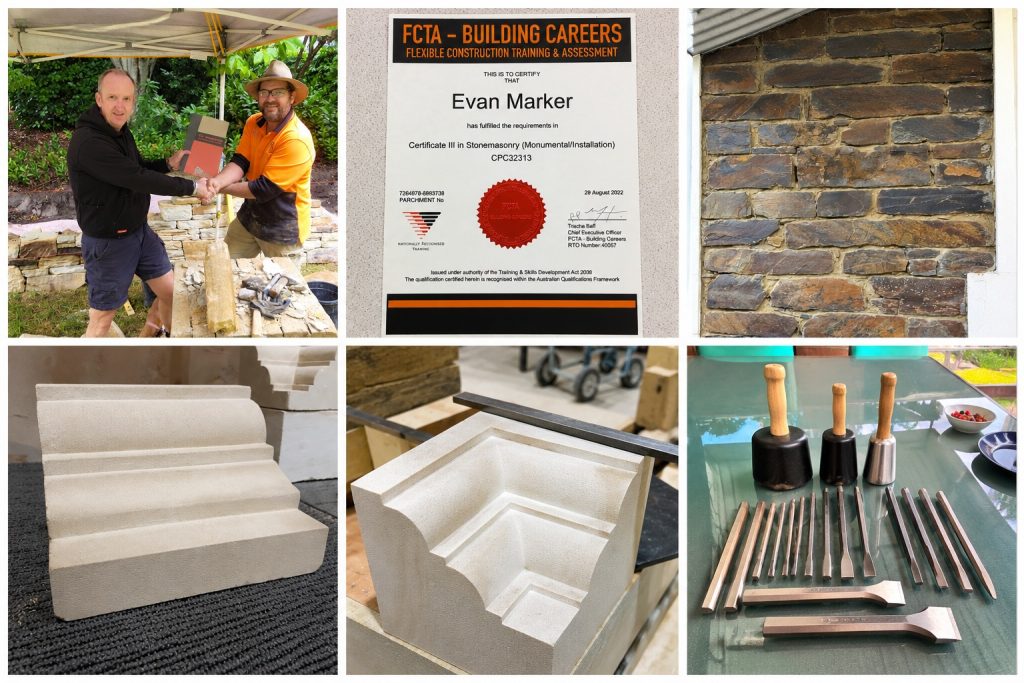
On the other hand, consider the perception, Stonework as a dying art, and it may be understandable that this notion has arisen. For many years in Australia, there was no formal training pathway into the trade. A young person interested in learning the craft had limited opportunities to learn. The older stonemasons, trained in their homelands and migrating here, passed through the industry and younger stonemasons didn’t receive the kind of training that a proper apprenticeship affords. Often young tradespeople were trained by untrained seniors. Significant gaps emerged in the knowledge of all aspects of proper stonework. Stonework, as an art, a craft, a serious trade, was indeed dying. Unsuitable materials were being used and applied in an unsuitable manner. Proper techniques for dressing and fixing stone were forgotten. Quarries that had supplied the industry for decades were shutting their gates. The legitimacy of the trade faded.
Happily, this is changing. Informal training pathways that emerged out of necessity some years ago has been supplanted by a formal apprenticeship programme teaching traditional stonemasonry techniques. Young stonemasons are emerging into the industry with four years of training in all aspects of stonemasonry. Young tradespeople are spending time in cathedrals in the Uk and returning here to apply their knowledge. Trades people from a broad section of industries can get formal training in Heritage Skills, designed to promote proper techniques for the maintenance and renewal of our old buildings. There is an emerging level of professionalism in the trade that now places it alongside all other trades in terms of legitimacy.
Clients now have a wider choice and can be more confident that they are engaging a specialist do undertake any stonemasonry projects. A defined training pathway leads to more consistency in the industry. Higher standards creates more competition which leads to more certainty in the quality of stonework being delivered. This in turn gives clients more confidence to choose stonework to achieve their desired ends.
So, where once the impression of Stonework as a dying art may have been legitimate, it is no longer the case. The industry is alive and well.
If you’re considering natural stone for a new home, renovation, feature wall or landscaping project, contact Evan Marker Stonework to discuss the stone and style best suited to your property.
Phone: 0417 672 273
Email: evan@evanmarkerstone.com.au